
Buying Documents from BankDocs.net: Common FAQs
We’ve all been there: you are days away from closing on a mortgage, only to be told the bank needs just one more recent paystub. This endless cycle of surprise requests causes “documentation fatigue,” the overwhelming exhaustion of constantly hunting down missing paperwork right when you need your money most.
Industry data reveals that nearly half of all application delays stem from simple mistakes on essential banking loan documents, like submitting an expired utility bill or an unverified signature. Identifying these core reasons for document rejection helps you master your “approval velocity”—which is simply the banking term for how fast your paperwork goes from submitted to accepted.
Finding clear rules shouldn’t feel like taking a complicated legal exam. Designed as a practical roadmap, this guide covers essential FAQs to streamline your approval process. The complete BankDocs toolkit helps bypass headaches, providing immediate relief and reliable steps for fixing financial documentation errors before they stall your progress.
The Secret to Standardized Forms: Why Using Professional Templates Prevents Application Rejection
Handing a bank a messy, custom-made document is a fast way to get your application denied. Today, banks don’t just rely on humans to read paperwork; they use OCR (Optical Character Recognition). Think of OCR as a digital robot that scans your page for names, dates, and account numbers. If your document has unusual fonts or bad spacing, the robot gets confused and automatically rejects your file. Using the best banking document platform ensures your paperwork speaks this digital language perfectly.
The easiest way to prevent these automatic rejections is to rely on recognized layouts rather than creating your own. The true benefits of verified bank templates come from their predictability. When you use a professional format, you guarantee three essential features:
- High-resolution fonts that scanners read effortlessly.
- Correct alignment so your details sit exactly where the system expects them.
- Updated regulatory fields that meet current banking laws.
Bypassing these common formatting traps ultimately speeds up your approval time. Accessing standardized bank forms removes the guesswork entirely, saving you from a frustrating second trip to the branch. A clean layout ensures bank computers can process the data, leading directly to the next critical requirement: verifiable proof of residency.
Mastering the Online Bill Maker: A Step-by-Step Guide to Proof of Residency
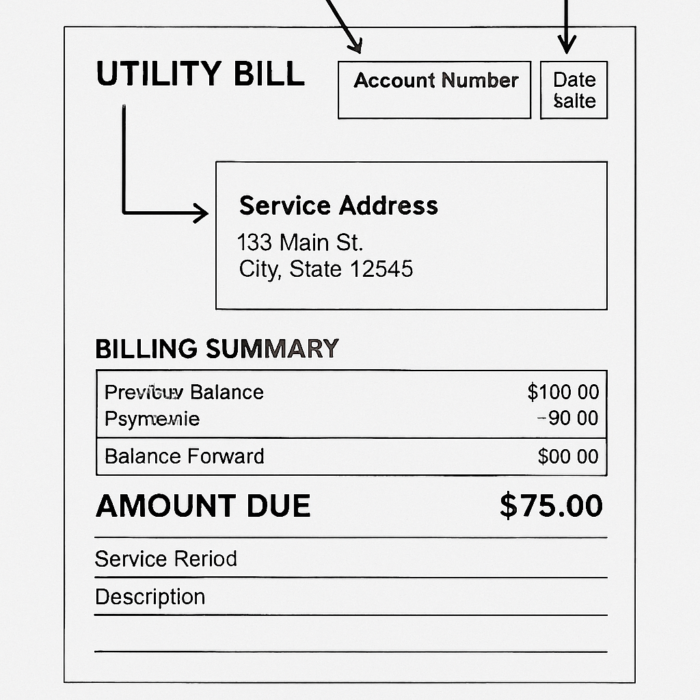
We have all frantically searched through junk drawers for a crisp water bill to bring to the bank. Because modern branch systems use digital scanners, smudges or creases cause instant rejections. Using an online bill maker solves this by producing high-legibility documents. You can leverage a standard bill statement template to create exactly what the bank computers expect to see.
Timing is just as critical as visual clarity when submitting paperwork. Banking regulations require proof of residency to fit within a strict verification window, commonly known as the “90-day rule.” If your document is older than three months, the system flags it as expired. A smart bill generator helps adjust the issue date to fall exactly within this mandatory timeframe.
Another hidden trap is mismatched information between different pieces of paperwork. The home address on your state ID must mirror your utility document perfectly, right down to the apartment number. When you use tools to generate bill online, you directly control these crucial details. Even if you practice with a free bill generator, always synchronize your street abbreviations so they match your identification exactly.
Presenting flawlessly timed residency paperwork proves you are prepared to open your account smoothly. Once your current address is verified, the financial institution moves straight to validating your identity through mandatory KYC protocols.
Cracking the KYC Code: Identifying the Mandatory Documents Every Bank Requires
Handing over your driver’s license triggers a critical security process behind the scenes. Federal law requires banks to perform KYC—Know Your Customer. This rule ensures strangers cannot open accounts using your name. It pairs directly with AML (Anti-Money Laundering), which stops criminals from hiding illegal money. If you ever wonder what are mandatory KYC documents, they generally start with government-issued photo identification and the recent proof of residency previously discussed.
Visual inspections of your ID are rarely enough. Financial institutions cross-reference your submitted details against national databases to confirm your identity history. Think of it as a background check for your wallet; the bank’s system ensures your given name and social security number match official government records. This deep verification guarantees financial documentation legal compliance, protecting your money from modern identity thieves.
When you open a business account, the paperwork rules change entirely. Meeting your corporate account documentation needs requires proving your company is a legally registered entity using an EIN (Employer Identification Number)—essentially a social security number for your business. You must prepare the “Big Four” business documents:
- Articles of Incorporation
- EIN Confirmation
- Operating Agreement
- Business Bank Statements
Successful preparation is just the first step in a paperless banking world. Because most applications happen online, you almost never hand physical papers directly to a teller anymore. Translating physical proof into digital formats introduces completely new electronic signature and verification hurdles.
Beyond the Printer: Understanding Digital Signature Requirements and Verification Issues
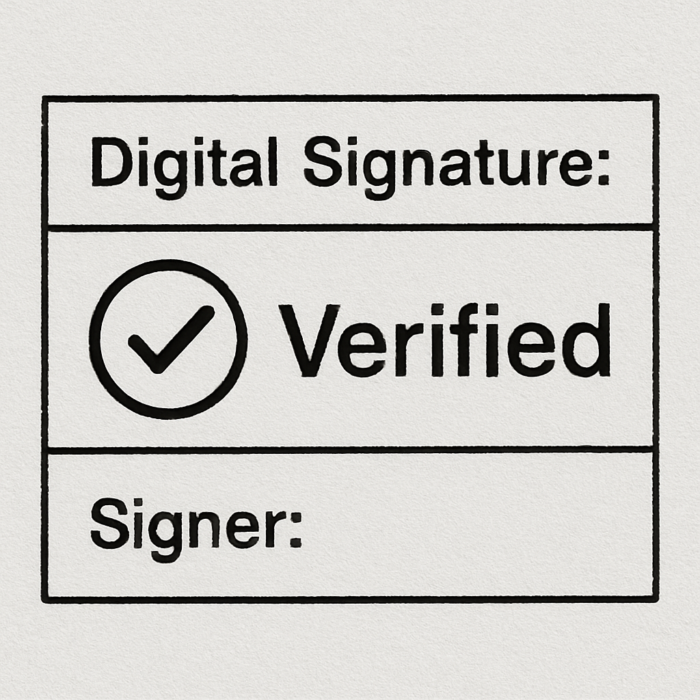
Signing a screen feels modern, but it usually isn’t enough for official paperwork. A simple picture of your signature is just an “electronic signature.” To meet strict banking digital signature requirements, institutions need a true “digital signature.” Think of this as an invisible wax seal for your PDF. It uses hidden code to prove nobody tampered with the file after you signed.
Because these codes are invisible, automated computer systems check them the second you click submit. If you accidentally alter the file’s background data—called metadata—you will trigger frustrating bank statement verification issues. These automated flags happen when the software notices the file’s digital footprint looks manipulated, even if you just innocently cropped a messy edge before uploading your document.
To bypass these roadblocks, always submit clean files downloaded directly from your online account. Some people use a bank statement creator to organize their transaction history for personal budgeting, but submitting these to a lender guarantees an instant rejection. Even a high-quality us bank statement generator cannot replicate the authentic, encrypted metadata major banks require to confidently approve your application.
Navigating these invisible rules successfully saves you from endless back-and-forth emails with your loan officer. Once your verified files are finally accepted, priority immediately shifts to implementing strict security protocols to keep those sensitive PDFs safe from hackers.
Shielding Your Identity: Top Security Protocols for Storing Digital Financial Docs

Handing over sensitive files is only half the battle; keeping digital copies away from identity thieves is equally crucial. Before saving anything, be careful where you create or manage files. If you use a legal document generator to draft agreements or a bank statement generator app for personal budgeting, avoid platforms missing the “HTTPS” padlock icon or those that store your data indefinitely.
Once downloaded, you need strict financial paperwork security protocols. The safest method is “document vaulting”—treating a specific digital folder like a physical steel safe. Protect your vault using this three-step strategy:
- Encrypted Storage: Use cloud drives offering “encryption at rest.” This simply means your files are scrambled into unreadable code while sitting untouched on their servers.
- Two-Factor Authentication (2FA): Require a temporary text or app code alongside your password to open your files.
- Secure Deletion: Routinely empty your computer’s “Downloads” folder so temporary copies don’t linger.
Treating personal data with this level of respect ensures your identity remains protected. With files verified and safely locked away, establishing a final review process guarantees flawless document submission.
From FAQ to Finished: Your Final Action Plan for Flawless Document Submission
You no longer have to guess what paperwork your bank needs. By double-checking your files now, you can get your application approved 50% faster and avoid a frustrating second trip to the branch. Whether you rely on an easy bank statement generator or gather physical papers, run through this final five-step review before submitting:
- Date: Is the document from the last 90 days?
- Spelling: Does your printed name exactly match your ID?
- Resolution: Is every word clear and easy to read?
- Address: Does the location strictly match your application?
- PDF integrity: Are all pages fully included without being cut off?
Once you treat these records as the keys to your financial security, everything from opening a basic checking account to navigating a mortgage document preparation guide becomes simple. Reviewing essential documentation guidelines prevents delays. Take a breath, organize your files, and confidently submit your paperwork today!